
Written by Murtaza
Summary
- Email marketing succeeds through strategy, not sending frequency—segmentation, customer journeys, testing, and measurement consistently outperform mass email blasts.
- Personalized and behavior-driven emails generate the strongest results—welcome sequences, drip campaigns, and triggered emails create higher engagement than generic promotional messages.
- A high-performing email program treats the inbox as a relationship, not a broadcast channel, focusing on relevance, value, and long-term trust rather than short-term promotions.

The Email Marketing Approach That Actually Gets Results in 2026
Here is an uncomfortable truth: most email dies before it is ever sent. Not because the copy was clunky or the design was ugly — but because there was no email marketing approach behind it at all. Someone grabbed a template, typed something that sounded vaguely professional, and fired it at 10,000 people who promptly did… nothing.
Now for the numbers that should keep you up at night. The global average open rate hovers around 21.5%, per Mailchimp’s industry benchmarks (and that figure is generously inflated by Apple’s Mail Privacy Protection, so real engagement is often lower). Translation: nearly 80% of every email you send is never seen. Brutal.
But here is the plot twist the headlines skip. Brands running a structured email marketing approach — real segmentation, tested subject lines, mapped customer journeys — routinely punch through to 40–60% open rates. Same inbox. Same humans. Wildly different results. The only variable that changed was the strategy.
This guide unpacks exactly that email marketing approach. You will get plain-English definitions, real email marketing examples, a beginner-proof starting sequence, the types of email marketing that still work in 2026, and email blast marketing strategies you can run this week without landing in the spam folder. Let us go.
What Is an Email Marketing Approach and Why Does It Matter?
An email marketing approach is the deliberate system behind how a brand plans, segments, writes, sends, and measures its emails. It is the difference between firing off a newsletter because it is Tuesday and sending a targeted email marketing campaign because a specific segment just did a specific thing.
Without it, you are blasting. With it, you are communicating. The inbox is the most personal room a brand gets invited into — and most senders treat it like a megaphone in a library. The ones that win treat it like a conversation with someone they actually respect.
 Remarkable Facts
Did You Know?
Click the button below to discover a remarkable fact.
Remarkable Facts
Did You Know?
Click the button below to discover a remarkable fact.
The Four Pillars of a Working Email Marketing Approach
Every high-performing email marketing strategy stands on four legs. One: segmentation — slicing your list by behaviour, demographics, or engagement so each send reaches the right people. Two: a mapped journey — knowing exactly which message a subscriber gets at which stage. Three: tested subject lines — treating the subject line like the headline of an email ad sample, not an afterthought. Four: closed-loop measurement — tracking opens, clicks, and conversions, then letting that data sharpen the next email blast strategy.
The Main Types of Email Marketing Used in 2026
Knowing the types of email marketing is the foundation of the whole thing. Each one serves a different moment in the relationship and demands its own tone, rhythm, and design.
|
Type of Email |
Purpose |
When to Use It |
|
Welcome Series |
Onboard new subscribers, set expectations |
Immediately after sign-up |
|
Promotional Email |
Drive sales, offers, seasonal pushes |
Launches, sales, events |
|
Newsletter |
Build authority and loyalty |
Weekly or monthly, consistently |
|
Transactional Email |
Confirm purchases, bookings, actions |
Triggered by user behaviour |
|
Re-engagement Email |
Win back the about-to-churn |
After 60–90 days of silence |
|
Drip Campaign |
Nurture leads on autopilot |
Post-sign-up, download, or trial |
|
Announcement Email |
Share updates and launches |
As needed — not more than weekly |
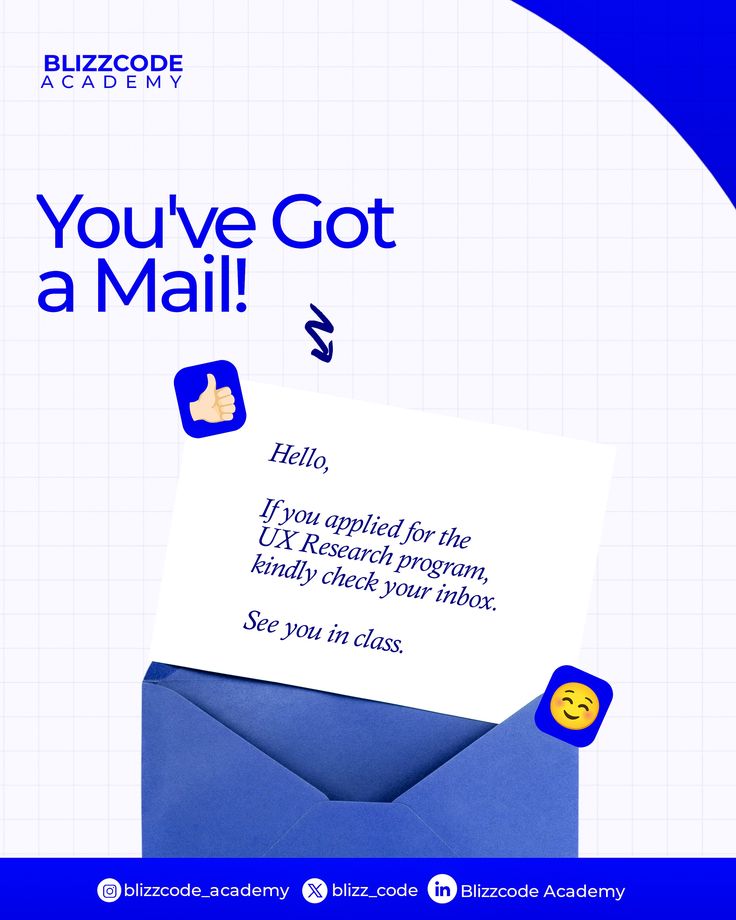
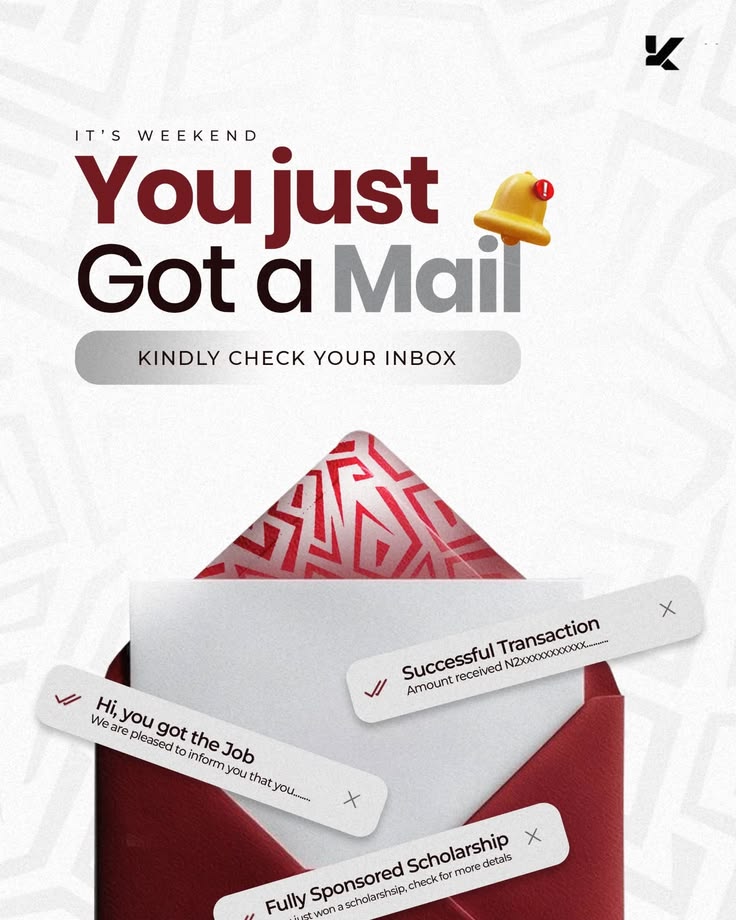
“If #socialmedia is the cocktail party, then #emailmarketing is the ‘meet up for coffee’…”
Email Marketing Examples That Show What a Smart Approach Looks Like
Frameworks are useful. Real email marketing examples are unforgettable. Here are three email advertising campaign styles that show the range of what a sharp approach can pull off.
What Do the Best Email Marketing Examples Have in Common?
The greats — think Airbnb, Spotify, Zomato — share four structural habits. The subject line earns the click (specific, personal, or deliciously curious). The body leads with value, not the brand. There is one call to action, not six. And the design serves the message instead of shouting over it.
Three Real Email Advertising Campaign Approaches That Work
The Behaviour-Triggered Campaign.
Search for a Goa stay on Airbnb and within hours: “You searched for Goa — here’s what’s free this weekend.” The send is triggered by action, personalised by data, and lands exactly when intent peaks. Behaviour-triggered emails routinely out-open standard newsletters by around 70%.
The Narrative Newsletter
Spotify Wrapped works because it tells you your own story — your artists, your minutes, your weird late-night genre. It turns data into identity, and people share it for free. The email marketing strategy quietly becomes word-of-mouth.
The Value-First Drip.
Mailchimp’s onboarding sequence sends six emails over two weeks, each teaching one thing for email marketing for beginners — with no hard sell until email five. Trust gets built before the ask. That approach converts cold sign-ups far better than a lone promotional email advertising campaign ever could.
Email Marketing Strategy for Beginners: Where to Actually Start
Email marketing for beginners feels overwhelming because the tools, tactics, and jargon all show up at once, uninvited. The fix is almost rude in its simplicity: ignore most of it at first and build from a tiny, clear foundation.
How Do I Start Email Marketing From Scratch?
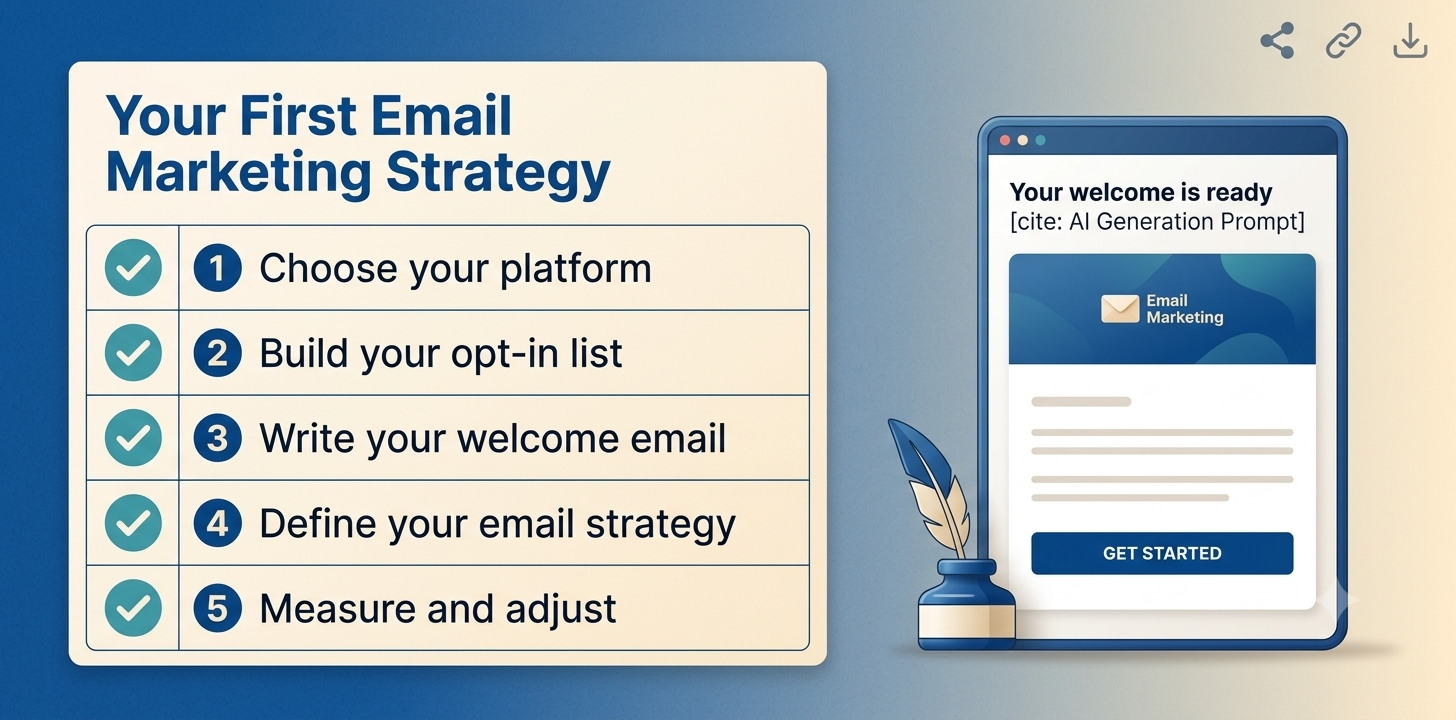
If you are wondering how do I start email marketing without a marketing degree, here is the honest answer: five steps, in this exact order. Scramble the order and you end up with a list and no strategy, or a strategy and no list — both of which produce the same sad outcome: an email blast strategy nobody reads.
- Step 1 — Pick your platform. Start with something beginner-friendly: Mailchimp, Brevo, or Kit (formerly ConvertKit). Each lets you manage subscribers, design emails, and track performance from one dashboard.
- Step 2 — Build your list deliberately. Every subscriber should have actively opted in. A 500-person list at a 45% open rate out-earns a 10,000-person list at 3%. Engagement beats size, every single time.
- Step 3 — Write the welcome email first. Before anything else, write the welcome. It sets expectations and arrives when interest is at its absolute peak — which is why it often posts the highest open rate of everything you ever send.
- Step 4 — Decide the strategy before the calendar. Lock your email types, frequency, and goals before you design a single email ad sample. Even a one-page documented email marketing strategy beats reactive, vibes-based sending.
- Step 5 — Measure, then adjust. Treat the whole thing as a living system. Track opens, clicks, and unsubscribes per campaign. Five campaigns in, you will have enough data to make changes that actually mean something.
The Subject Line Is Your Most Important Email Marketing Decision
A gorgeous email with a limp subject line will never be opened, full stop. The subject line is the headline of your email advertising campaign — the one line that decides whether your approach lives or dies at first contact. Keep it under 50 characters, make it specific, and personalise if you can. “Your order is ready” beats “We have great news about your recent purchase with us” every time, and it is not close.
Email Blast Marketing Strategies: Sending at Scale Without Spamming
“Email blast” carries baggage for good reason — a sloppy email blast strategy is how brands speed-run their way into spam folders and unsubscribe queues. But a thoughtful email blast, fired at a well-segmented list, is still one of the highest-ROI moves in all of digital marketing. According to the Data & Marketing Association, email returns roughly $36–$42 for every $1 spent — consistently lapping paid social, display, and short-term SEO.
What Is the Difference Between an Email Blast and a Drip Campaign?
An email blast is a one-time send to a big slice of your list — a promo, a launch, a seasonal offer, an announcement. A drip campaign is an automated sequence triggered by behaviour or time, nudging a subscriber from “who are you” to “take my money” at their own pace. Mature programs run both: blasts for broad, time-sensitive news, drips for personalised, behaviour-led nurture.
Four Email Blast Marketing Strategies That Work in 2026
Segmented sending. Never send the same blast to your entire list. Slice by engagement (active, warm, cold), purchase history, or sign-up source. Segmented sends beat blanket blasts by roughly 14% on opens and 100%+ on clicks, per Mailchimp’s segmentation data.
Send-time optimisation. Most platforms now send at each subscriber’s historically best moment instead of a rigid 10am Tuesday. That alone can lift opens 20%+ with zero change to your content. Free wins are the best wins.
The re-engagement blast. Before you delete cold contacts, send one honest “Are you still interested?” email. It recovers a chunk of sleepers and cleans out the rest — and a clean list quietly improves deliverability for every future send.
The triggered promo blast. Ditch the calendar-only schedule and trigger promos off behaviour — wishlisted items, abandoned carts, recently browsed categories. A behaviour-triggered approach can convert at roughly 3x a standard promotional blast.
Email Ad Sample: What a High-Performing Email Looks Like
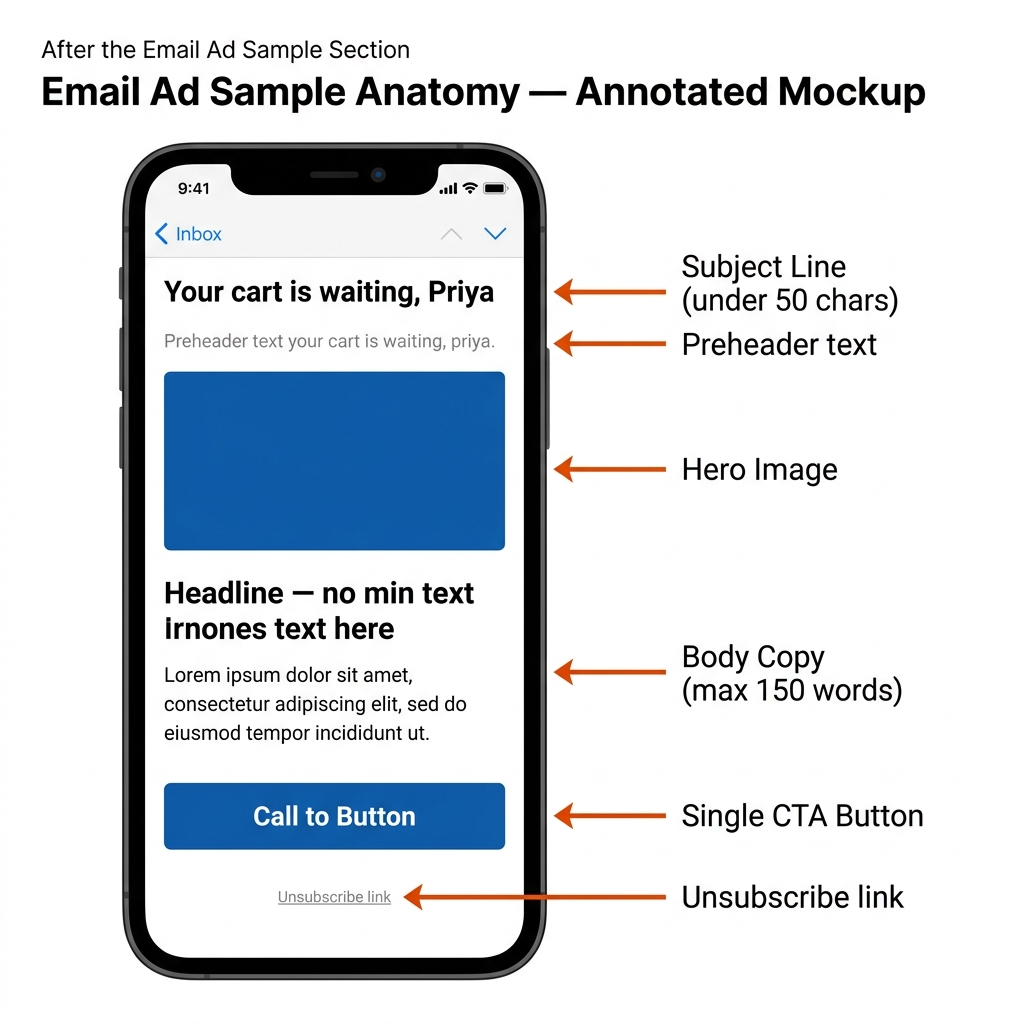
A strong email ad sample follows a proven skeleton:
(1) Subject line — specific, under 50 characters, personalised where possible.
(2) Preheader — 40–90 characters that extend the subject.
(3) One clear headline — what the reader gets for opening.
(4) Body copy — 50–150 words max for promos.
(5) One CTA — not three, not two, one.
(6) Unsubscribe link — legally required, and a trust-builder rather than a trust-killer.
Conclusion: Choose Your Email Marketing Approach Before You Choose a Template
Your email marketing approach is not a template — it is a decision about how you want to show up in the most personal digital space your audience will ever let you into. The brands with the best results are not the ones with the prettiest designs or the most relentless blasts. They are the ones that segmented carefully, mapped the journey honestly, and treated every email like a conversation rather than a broadcast.
Email marketing for beginners starts with a single welcome email and one ruthless question: why would this person want to open this? Everything else — what to send, when, to whom — flows from the answer. Nail the email marketing approach first, and the execution gets almost easy.
Your list is not a megaphone. It is a relationship. Treat it that way, and the results will keep paying you back for years.
Frequently Asked Questions
Q1 — What is an email marketing approach in simple terms?
An email marketing approach is the planned system a brand uses to run its email — who gets which message, when campaigns go out, what each one is meant to achieve, and how results get measured. It is the difference between blasting at random and running a structured email marketing campaign that nudges subscribers toward a clear outcome. Documented beats improvised on opens, clicks, and revenue — every time.
Q2 — What is the difference between an email blast strategy and an email marketing campaign?
An email blast is a single mass send to a large chunk of your list at one time — usually a promo, announcement, or seasonal offer. An email marketing campaign is the broader thing: a series of strategically planned emails with a defined goal, audience, and measurement plan. The best email blast marketing strategies live inside a campaign framework. A blast with no campaign context tends to spike, then vanish.
Q3 — How do I start email marketing from scratch as a beginner?
Email marketing for beginners comes down to five moves: pick a platform (Mailchimp, Brevo, or Kit), build an opt-in list of people who actually asked to hear from you, write the welcome email before anything else, document a one-page strategy, and measure your first five campaigns before changing a thing. Do not try to run every type of email marketing at once — one type done well beats a five-stream system launched badly.
Q4 — How much does it cost to run an email advertising campaign?
It scales with platform and list size. Most tools offer free tiers for lists under 500–2,000 subscribers — plenty for the email marketing for beginners stage. As you grow, expect roughly Rs.800 to Rs.8,000 per month for small-to-mid businesses. The real story is ROI: at around $36–$42 returned per $1 spent, email is one of the highest-returning channels in digital marketing, and it pays back faster than most.
Q5 — What are the risks of a poorly executed email marketing approach?
Three big ones. Deliverability damage — spam complaints from untargeted sends can get your domain flagged, hurting every future email. Subscriber attrition — too many or too-irrelevant emails drive unsubscribes faster than you can replace them. Brand erosion — impersonal, value-free emails turn the brand association negative. On top of that, GDPR and India's Digital Personal Data Protection Act impose real obligations on any program handling personal data.
Q6 — Is email marketing regulated in India?
Yes. It is governed by the Information Technology Act 2000, the IT (Amendment) Act 2008, and increasingly the Digital Personal Data Protection Act 2023. Any approach that collects or processes subscriber data must honour consent — active opt-in and a clear unsubscribe in every email — and commercial sends must respect TRAI's unsolicited-communication rules. Ignore these and you are courting regulatory and reputational risk.
Q7 — What return can I expect from a well-executed email marketing strategy?
Email consistently posts among the highest ROI of any digital channel — the widely cited benchmark is about $36–$42 back per $1 invested, per the Data & Marketing Association. Your actual return depends on list quality, strategy maturity, offer relevance, and engagement. A segmented, behaviour-triggered campaign typically pulls 2–3x the revenue of a plain blast on the same list. Expect leaner returns early while the list builds — results compound hard after 6–12 months of consistency.
Q8 — Where do I go if my email marketing approach stops working?
When results slide — falling opens, rising unsubscribes, dead clicks — audit the list before you touch the content. Cut subscribers who have not opened anything in 90 days, confirm your strategy still matches what people signed up for, and A/B test subject lines before rewriting wholesale. For deeper diagnosis, lean on Google Analytics goal tracking and a deliverability checker like MXToolbox to pinpoint whether the problem is content, segmentation, or technical deliverability. Consistent measurement is what turns a struggling program into a high-performing one.
Written by Murtaza
Related Articles
Related
Blogging Case Study for Students | blogging strategy examples
Successful blogs are built on strategy, not volume—the highest-performing case studies focused on audits, keyword selection, and content quality rather than publishing more articles. Different growth stages require different blogging strategies—from consistent...
Return of Mascots: the humanization of brand identity | The revival of brand mascots
1. Brand Mascots Outperform Celebrities Mascots generate stronger brand recall, lower long-term costs, and greater ownership than celebrity endorsements. They become long-term brand assets that build recognition and trust over time. 2. In the AI Era, Personality Is a...
This Blinkit Marketing Strategy Screams “Genius”
Blinkit’s “Scream for Ice Cream” campaign turned a standard discount promotion into a viral social media event. Users screamed into the Blinkit app for 15 seconds, with louder screams unlocking larger ice cream discounts. The campaign succeeded because it combined...